What is Transcranial Magnetic Stimulation (TMS)?
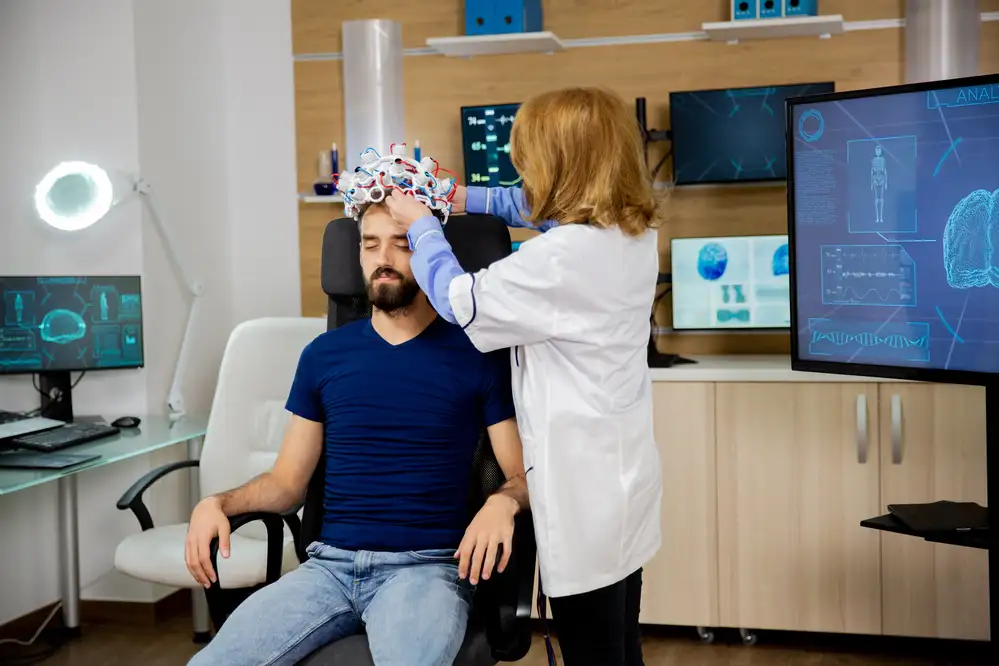
Transcranial Magnetic Stimulation (TMS) is a treatment that temporarily changes the activity in your brain. This is done with a device that gives your brain a short magnetic signal. A special form of TMS is Repetitive Transcranial Magnetic Stimulation (rTMS). This is also called magnet therapy.
With TMS, certain parts of your brain receive a series of magnetic signals in succession. This makes your brain more or less active. As a result, you can suffer less from complaints for a long time.
Brain disorders and brain variants where DBS is used
 Major Depressive Disorder (MDD)
- Bipolar Disorder
- Obsessive-Compulsive Disorder (OCD)
- Post-Traumatic Stress Disorder (PTSD)
- Anxiety Disorders
- Schizophrenia (especially with negative symptoms)
- Chronic Pain Conditions
- Tinnitus
- Parkinson’s Disease
- Stroke Rehabilitation

When medications or psychotherapy don't work well
Who cannot get TMS?
Mechanism of action
TMS is based on the principle of electromagnetic induction, which allows to stimulate or inhibit the neuronal activity of specific brain areas, thus managing to re-establish the correct functioning of brain cells that are altered by the presence of a disorder.
More specifically, starting from an electrical stimulus that passes through the coil of the machine, a magnetic impulse is generated that can penetrate painlessly into the skull of the person being treated and reach the cerebral cortex, inducing a stimulatory current capable of modulating the activity of neurons. Depending on the parameters chosen for stimulation, the effect on the brain can be the following types:
- Excitatory Effect – Increases neuronal activity in underactive brain regions (commonly used in depression).
- Inhibitory Effect – Reduces excessive neuronal activity in overactive brain regions (often used in anxiety or OCD).
- Neuromodulation – Alters neural circuits involved in mood, behavior, and cognitive function.
- Functional Rebalancing – Restores balance between different areas of the brain affected by mental health disorders.
- Long-term Plasticity – Promotes long-lasting changes in brain connectivity and function.
How does TMS work?
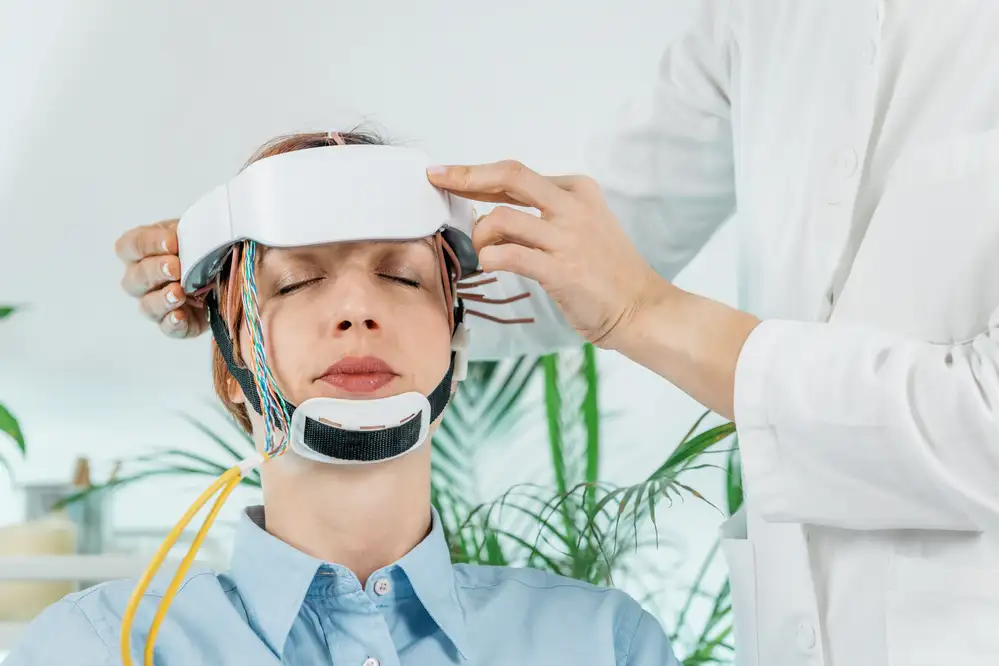
Doctors perform this treatment with a TMS device. This device makes magnetic signals. The doctor places the round part of the device against your head. This part is called the coil. The magnetic signals enter your brain via the coil.
The practitioner ensures that the magnetic signals reach the right parts of your brain. The signals make these parts of your brain more or less active. This can ensure that you suffer less from complaints for a long time. Usually you notice something after 10 treatments.
What does the treatment consist of?
✅ Initial Consultation and Eligibility for TMS Treatment
✅ Who Administers the TMS Treatment and What to Expect
✅ Preparing for Your First TMS Session
✅ How Your TMS Signal Strength Is Determined
The first time, the therapist also has to test how strong the signals should be for you. The therapist does this by placing the coil of the device around a certain part of your brain: the part that controls the movements of your fingers.
The coil makes a loud clicking sound. To protect your ears, you will receive earplugs. Then you will receive the first magnetic signal via the coil. The signals feel like someone is tapping your head. This can be strange or annoying, but it does not hurt.
The first signal is weak. This way the practitioner can carefully see how your brain reacts to the signal. The practitioner continues to give you signals until your thumb or finger starts to move a little. After that he knows what the right strength is for you. This test is only done during your first treatment. During the treatment itself, your fingers will no longer move. The signals then go to a different part of your brain.
✅ What Happens During a TMS Treatment Session
Then the treatment begins. The practitioner places the coil at the part of your brain that is causing your symptoms. This is often above one of your ears. The treatment usually takes about 30 to 45 minutes.
You will not be put under anesthesia, which is not necessary. So you will remain awake during the entire treatment. After the treatment you can simply go home and do your daily activities.
If you have depression, you may also receive cognitive behavioral therapy (CBT) during your TMS treatment. You will talk to a psychiatrist about your symptoms. And about what you can do to ensure that you suffer less from your depression.
✅ Follow-Up and Progress During TMS Treatment
Ready to explore TMS therapy for depression?
Types of Transcranial Magnetic Stimulation (TMS)
✅ Repetitive Transcranial Magnetic Stimulation (rTMS)
rTMS is the most widely used type of transcranial magnetic stimulation in the clinical field thanks to its high programming flexibility that allows its use for the treatment of many disorders. It is a neuromodulation technique that uses a stimulation characterized by short magnetic pulses repeated and spaced at programmable time intervals to achieve the desired therapeutic effect. The great advantage of rTMS includes:
- Most widely used type of transcranial magnetic stimulation in clinical practice
- High programming flexibility for various disorder treatments
- Neuromodulation technique using short magnetic pulses
- Pulses are repeated and spaced at programmable time intervals
- Achieves desired therapeutic effects effectively
- Non-invasive treatment option
- Can be customized to patient needs.
✅ Theta Burst Stimulation (TBS)
TBS is a very promising brain stimulation method characterized by the delivery of rapid repetitions of high-frequency magnetic stimuli divided into consecutive triplets. Through this type of TMS it is possible to administer different types of protocols that are able to obtain opposite effects on brain cells. The main advantage of TBS includes:
- Promising brain stimulation method
- Delivers rapid repetitions of high-frequency magnetic stimuli
- Stimuli are divided into consecutive triplets
- Allows administration of different protocol types
- Protocols can produce opposite effects on brain cells
- Enables targeted modulation of neuronal activity
- Potential for tailored therapeutic outcomes.
✅ Deep Transcranial Magnetic Stimulation (Deep TMS)
Deep TMS is an innovative technique in the field of Neuroscience, because, unlike other neuromodulation modalities, it has been shown to be able to reach in a non-invasive manner deep brain regions underlying the cerebral cortex up to 6cm deep. This allows reaching deep brain areas that have been shown to be at the basis of various psychiatric disorders, otherwise unreachable through other types of more superficial stimulation. The main advantages of Deep TMS includes:
- Innovative neuromodulation technique
- Non-invasive access to deep brain regions
- Can reach up to 6 cm below the cerebral cortex
- Targets deep brain areas linked to psychiatric disorders
- Reaches regions unreachable by superficial stimulation
- Offers new treatment possibilities for complex conditions
- Enhances effectiveness for deeper brain disorder treatment.
How TMS Can Treat Depression
TMS works by increasing or decreasing the conduction between the different centers that regulate mood. This is possible because today we are able to know and understand the complex network of connectivity that is the matter in which our emotions run. The mysteries of this network, with different centers and of different importance, are gradually being clarified.
Specifically, in people with resistant depression, magnetic stimulation acts on neurotransmitters and inflammation. If repeated over time, TMS modifies the functional architecture of the brain , bringing it back from pathology to normality.
After a few weeks of treatment, many patients begin to notice improvements in depressive symptoms, improving their quality of life and daily functioning. TMS can be combined with traditional treatments, in particular:
- 🗸 Antidepressant medications
- 🗸 Psychotherapy (e.g., cognitive behavioral therapy)
- 🗸 Pharmacological treatments for mood stabilization
- 🗸 Other neuromodulation techniques
- 🗸 Lifestyle modifications and support therapies.
The advantages of TMS Therapy
TMS therapy offers a non-invasive and effective approach to treating various mood and neurological disorders. Its targeted magnetic stimulation provides significant symptom relief with minimal side effects compared to traditional treatments. Among the main advantages of TMS are:
- 🗸 Non-invasive treatment with no surgery or anesthesia required
- 🗸 Targets specific brain areas involved in mood regulation
- 🗸 Can be used for patients who do not respond to medication
- 🗸 Minimal side effects compared to pharmacological treatments
- 🗸 Improves symptoms of depression and other mood disorders
- 🗸 Enhances brain function by modulating neural activity
- 🗸 Can be combined with other therapies for better outcomes
- 🗸 Outpatient procedure allowing patients to resume daily activities immediately.
TMS therefore improves the effect of pharmacological treatment and allows it to be reduced or, in some cases, even suspended. Furthermore, TMS:
🗸 Enhances the effectiveness of medication therapy
🗸 May reduce the need for higher doses of medications
🗸 Can help patients taper off certain medications safely
🗸 Supports long-term management of mood disorders
🗸 Provides an alternative for those sensitive to medication side effects
🗸 Helps restore normal brain function through repeated stimulation.
Results of Transcranial Magnetic Stimulation (TMS)
The practitioner often gives advice to the doctor who requested the TMS treatment for you. This advice also includes your options for further treatment.
- 🗸 Practitioner evaluates your response to TMS treatment
- 🗸 Provides feedback and recommendations to your referring doctor
- 🗸 Suggests possible next steps in your treatment plan
- 🗸 Helps tailor ongoing therapy based on your progress
- 🗸 Ensures coordinated care between therapist and physician
- 🗸 Supports informed decisions for further treatment options.
Risks of TMS
TMS is safe and usually has few risks. During the treatment you may get a headache. Usually this goes away quickly and can be treated well with a painkiller such as paracetamol.
Also, some muscles can move by themselves during the treatment. For example, your eye can start blinking. This stops immediately after the treatment. If you are taking medication, you usually do not need to stop taking it. Your doctor will determine whether this is necessary for you. So, in short:
- 🗸 TMS is generally safe with few risks
- 🗸 Possible side effect: headache during or after treatment
- 🗸 Headaches typically subside quickly and respond to painkillers like paracetamol
- 🗸 Involuntary muscle movements may occur, such as eye blinking
- 🗸 Muscle movements stop immediately after treatment
- 🗸 Usually no need to stop medications during TMS
- 🗸 Your doctor will assess if any medication adjustments are needed.
What disorders is TMS recommended for?
Different types of TMS can be used to treat a variety of disorders effectively and safely. In 2008, TMS received approval from the Food and Drug Administration (FDA) for the treatment of:
- 🗸 Major depressive disorder
- 🗸 Treatment-resistant depression
- 🗸 Bipolar disorder (in some cases)
- 🗸 Obsessive-compulsive disorder (OCD)
- 🗸 Post-traumatic stress disorder (PTSD)
- 🗸 Anxiety disorders
- 🗸 Certain neurological conditions (under research).
TMS is particularly suitable for those who have not obtained benefits from other treatments, such as pharmacological ones. However, in recent years various clinical studies have been carried out in various scientific disciplines to evaluate its effectiveness in different conditions.